Q2

Food For Tought Logo

2026

USM Haller, Built to Be Lived With

Tom van Leent

I can’t remember the first time I saw a USM Haller cabinet. But that is probably the whole point. It doesn’t need to stand out. It is simply there, doing what it is supposed to do. Yet once you start paying attention, you begin to see it everywhere. In places that have nothing to do with each other.

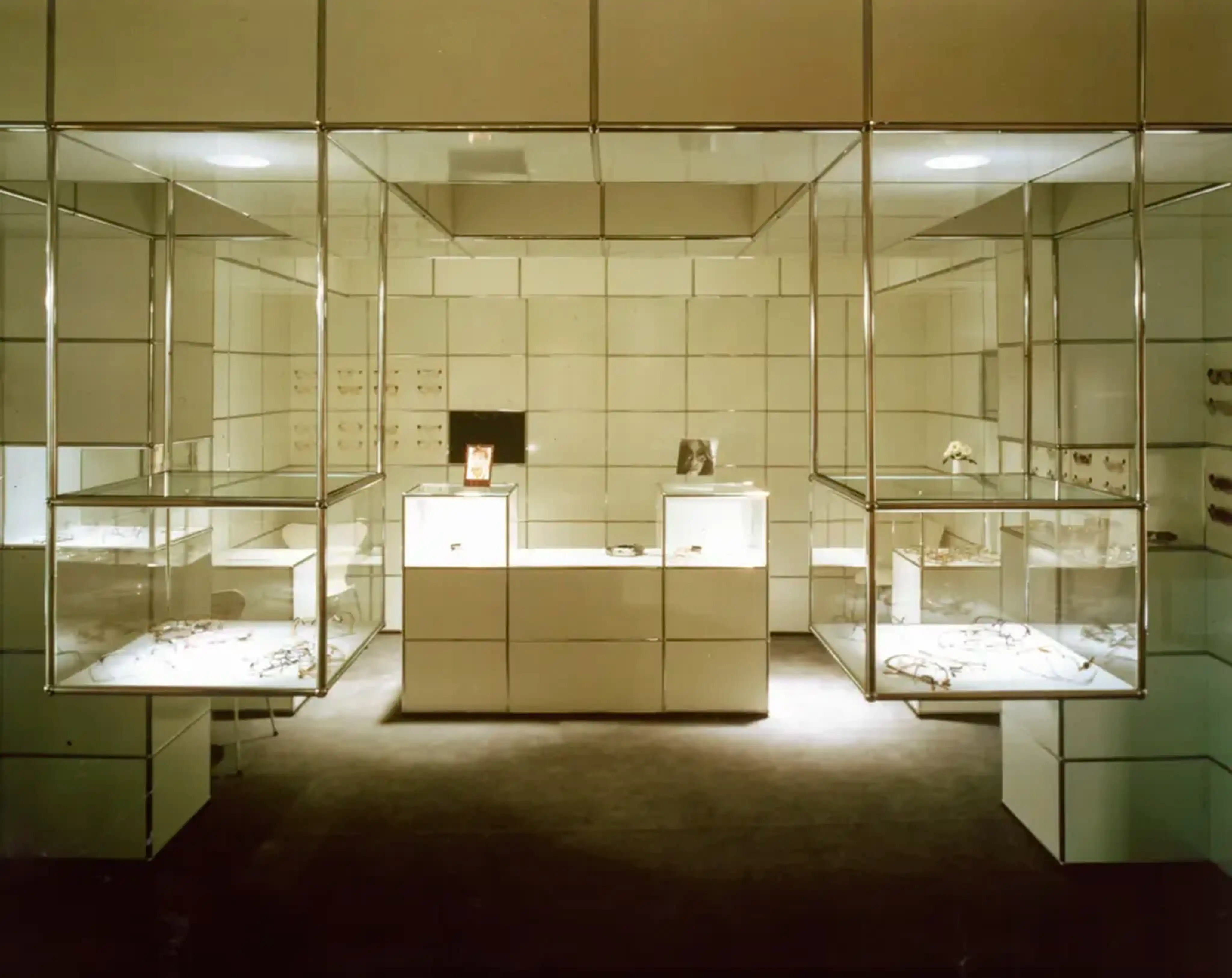
An apartment in Amsterdam. An office in London. A museum library in New York. A clothing store in Paris. The same cabinet, placed in completely different contexts. And yet it does not matter where you encounter it. It does its job and it works.

Above: USM Archive

Below: USM Archive

USM Haller started in 1885 as a metalworking company. In the 1960s, architect Fritz Haller was asked to design the company’s new headquarters. Along with it came the request to design furniture that would match the modularity and flexibility of the building itself.

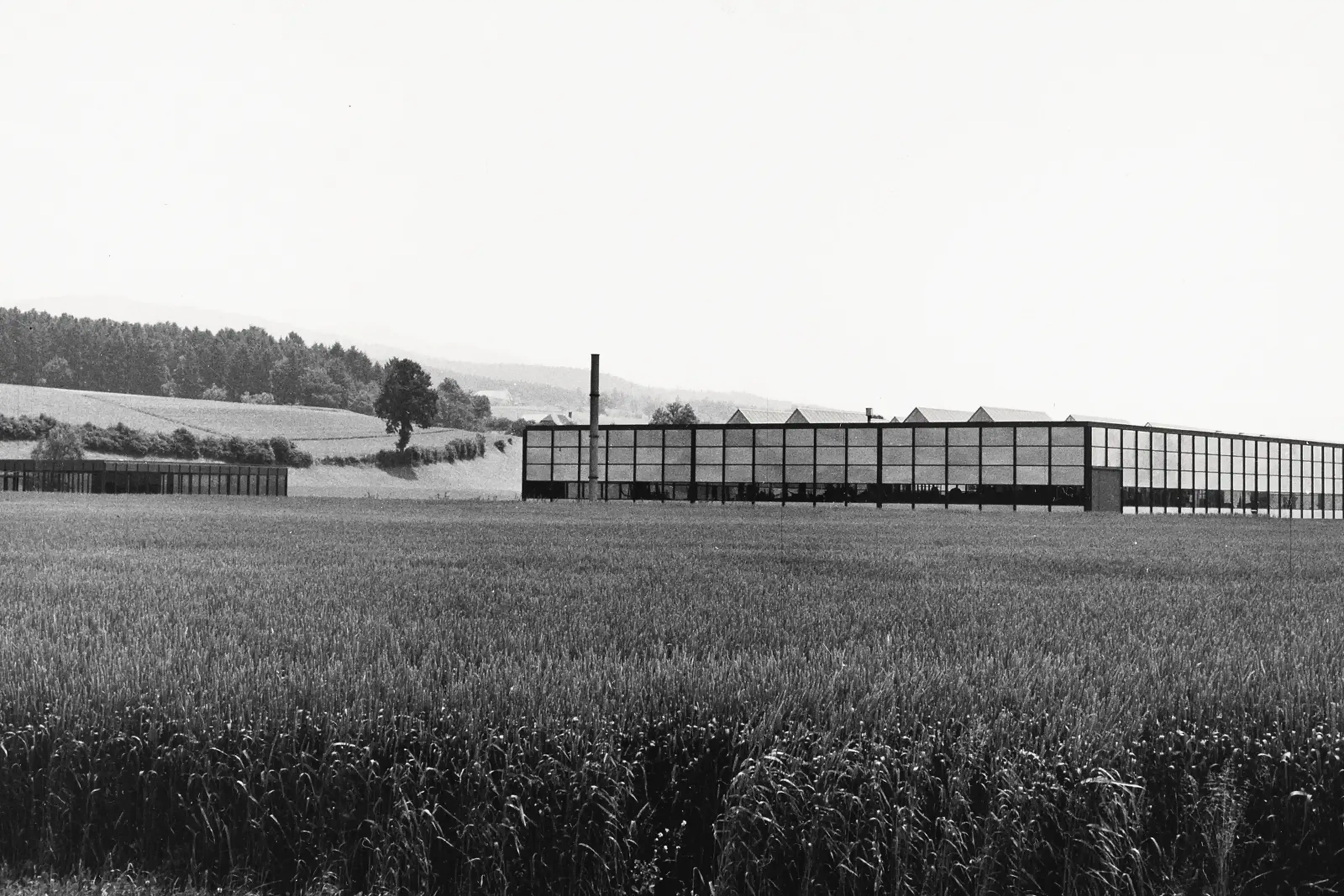
USM Factory designed by Fritz Haller

What Haller created was a logical and versatile system. Components produced separately and in large quantities, assembled according to the needs of each space. Steel tubes, chrome spheres, and colored panels. No unnecessary decoration. Nothing added just to make it look beautiful. Pure function, with the ability to grow and change when needed.

Above: USM Archive

Below: USM Archive

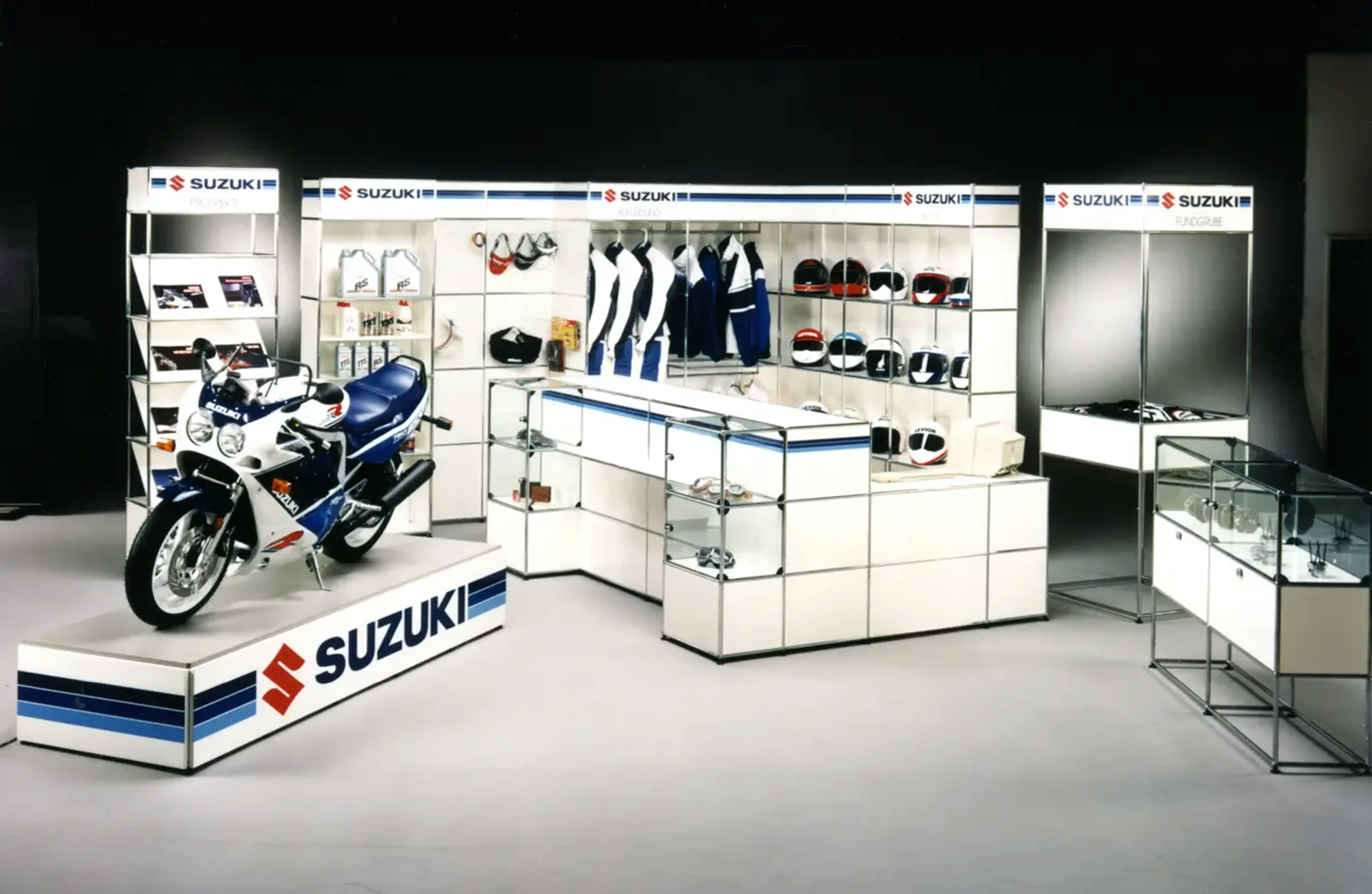
Suzuki exhibition set up using USM cabinets

What I find interesting is that products designed purely for function often have a certain balance. They need to do many things, yet they should not add sentiment or emotion. The materials are cold. The forms are strict and geometric. The thinking behind it is industrial. And yet, despite all of this, USM today manages to evoke something emotional that makes people grow attached to the product.

It is not necessarily about nostalgia. The feeling comes from the way the system moves and grows with you. Exactly as it was intended, only now far beyond the office it was originally designed for. When USM decided in the late 1960s to sell the system commercially, it allowed others to become part of the philosophy behind the product.

The furniture moved with the lives of the people who owned it. It changed when their lives changed. Panels were replaced. Modules were added. Layouts were rearranged. Over time the cabinets became a kind of memory. Not of objects, but a storage of moments for the person living with it.

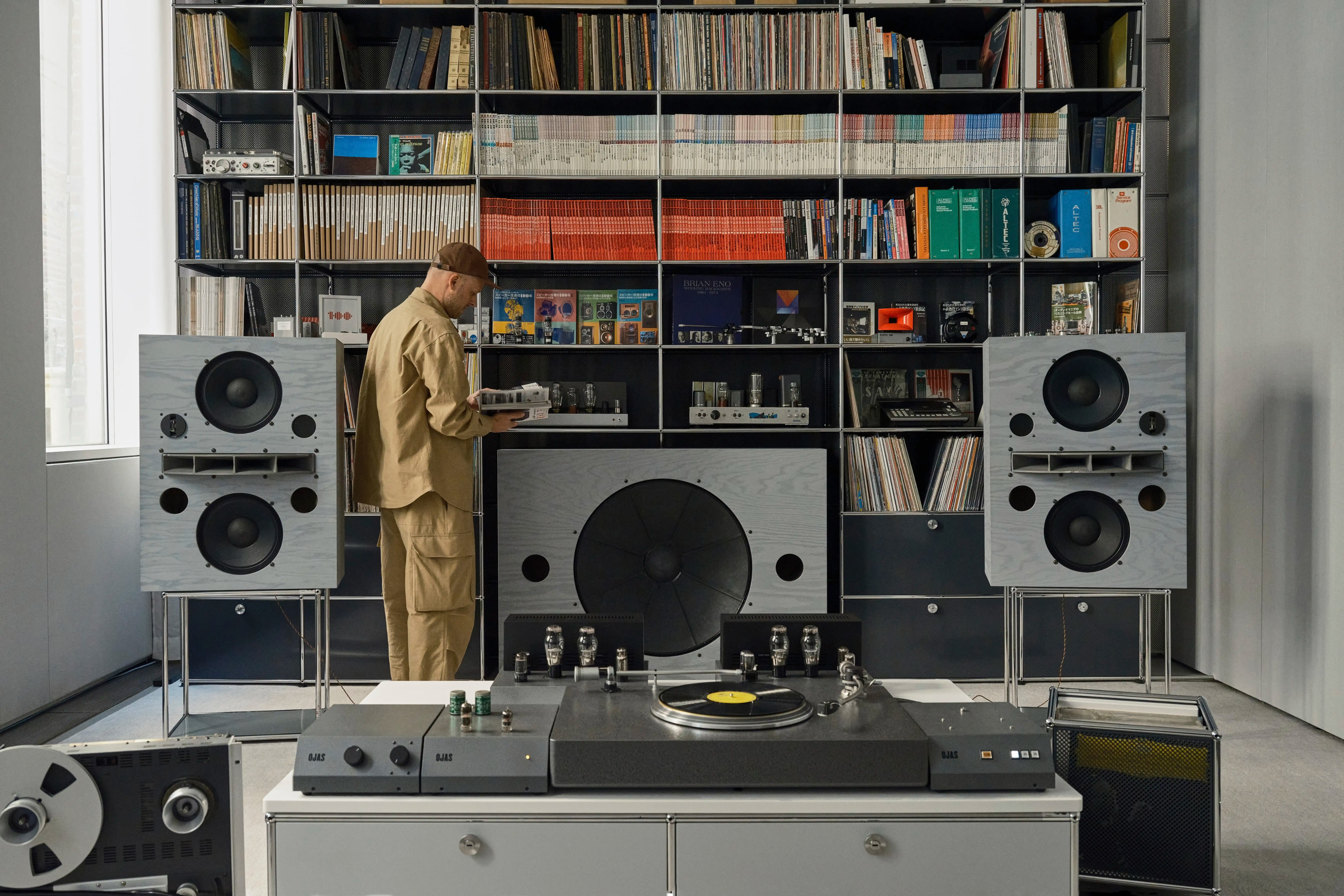
OJAS listening room with vinyl collection in USM Shelves + Drawers

Structure and self expression rarely exist in the same product. Most products are designed either to express personality or to serve a function. One or the other. What makes USM interesting is that, long before we realized it, it managed to combine these two seemingly opposite ideas.

A system built on restrictions and neutrality becomes a canvas. When simplicity is taken far enough, it creates freedom.
Above: USM Archive

Below: USM Archive

USM Storefront

To me, that is what good design does. It does not fill everything in for you. It leaves enough space to make something your own, and to keep making it your own.

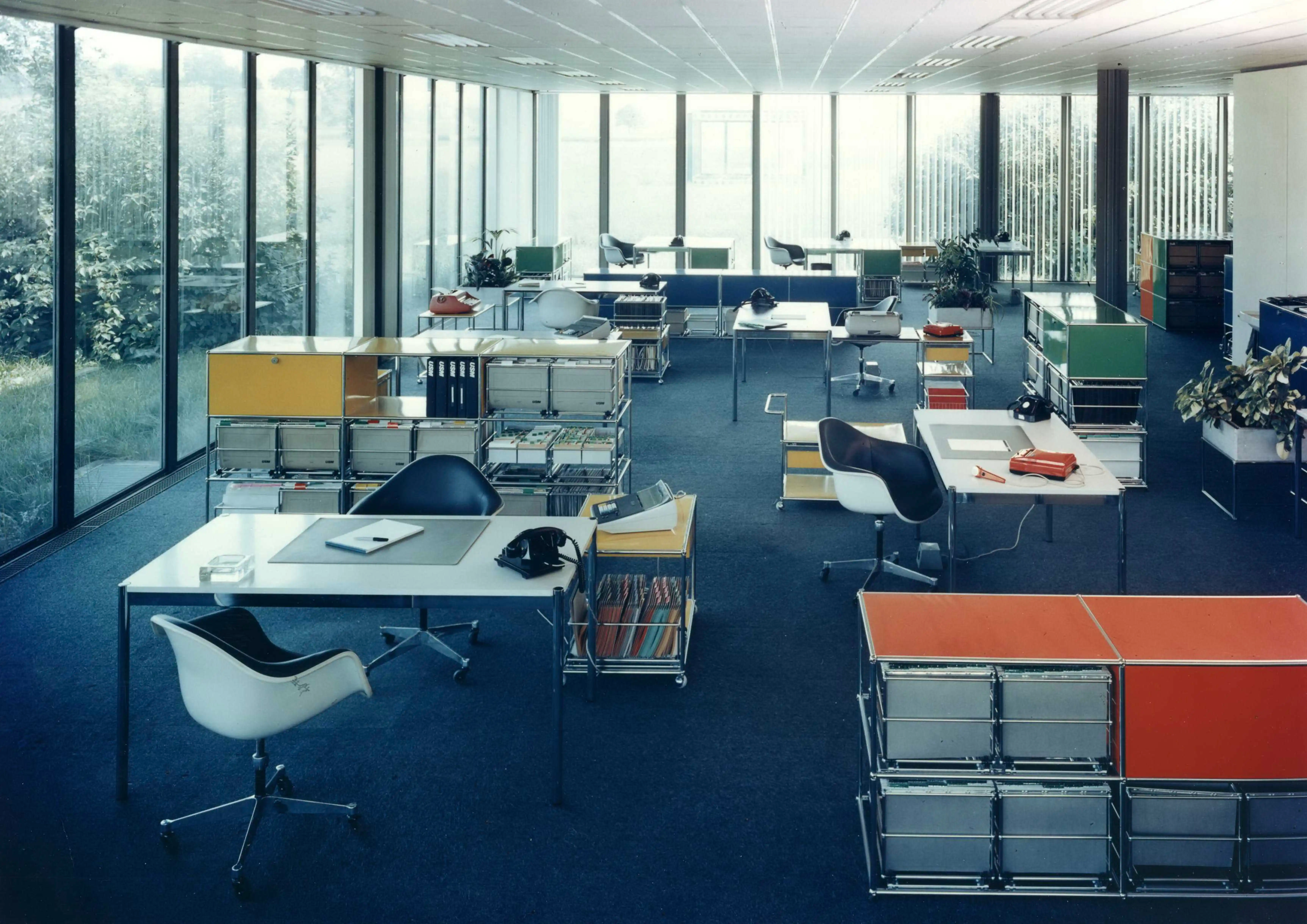
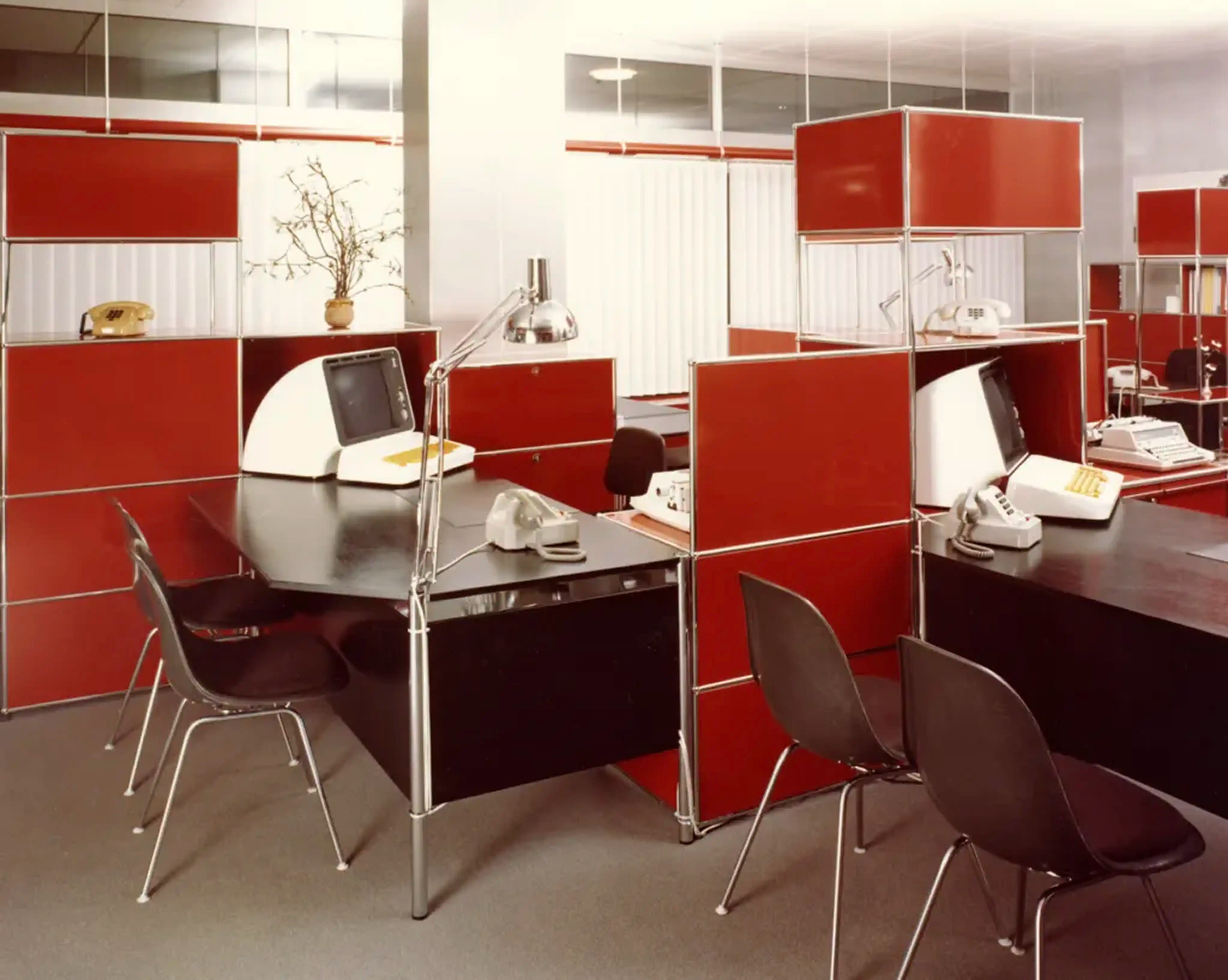
Office outfitted with USM Furniture

What truly lasts is not what is made to impress. It is what is made to live with. USM Haller modular furniture system has been doing exactly that for more than sixty years. In offices and apartments. Across industries and generations. In spaces that have nothing in common.

Most products are designed to stand out. A USM cabinet is simply always there.

Above: USM Archive

Read Next

Knoll: Total

Architecture

Archive

In

Sub

TT

Sp

FFT

Privacy Policy

© 2026 FFT. All rights reserved.

Q2

Food For Tought Logo

2026

I can’t remember the first time I saw a USM Haller cabinet. But that is probably the whole point. It doesn’t need to stand out. It is simply there, doing what it is supposed to do. Yet once you start paying attention, you begin to see it everywhere. In places that have nothing to do with each other.

An apartment in Amsterdam. An office in London. A museum library in New York. A clothing store in Paris. The same cabinet, placed in completely different contexts. And yet it does not matter where you encounter it. It does its job and it works.

A: USM Archive

L: USM Archive

R: USM Archive

USM Office setup
USM Factory designed by Fritz Haller

USM Haller started in 1885 as a metalworking company. In the 1960s, architect Fritz Haller was asked to design the company’s new headquarters. Along with it came the request to design furniture that would match the modularity and flexibility of the building itself.

What Haller created was a logical and versatile system. Components produced separately and in large quantities, assembled according to the needs of each space. Steel tubes, chrome spheres, and colored panels. No unnecessary decoration. Nothing added just to make it look beautiful. Pure function, with the ability to grow and change when needed.

Suzuki exhibition set up using USM cabinets
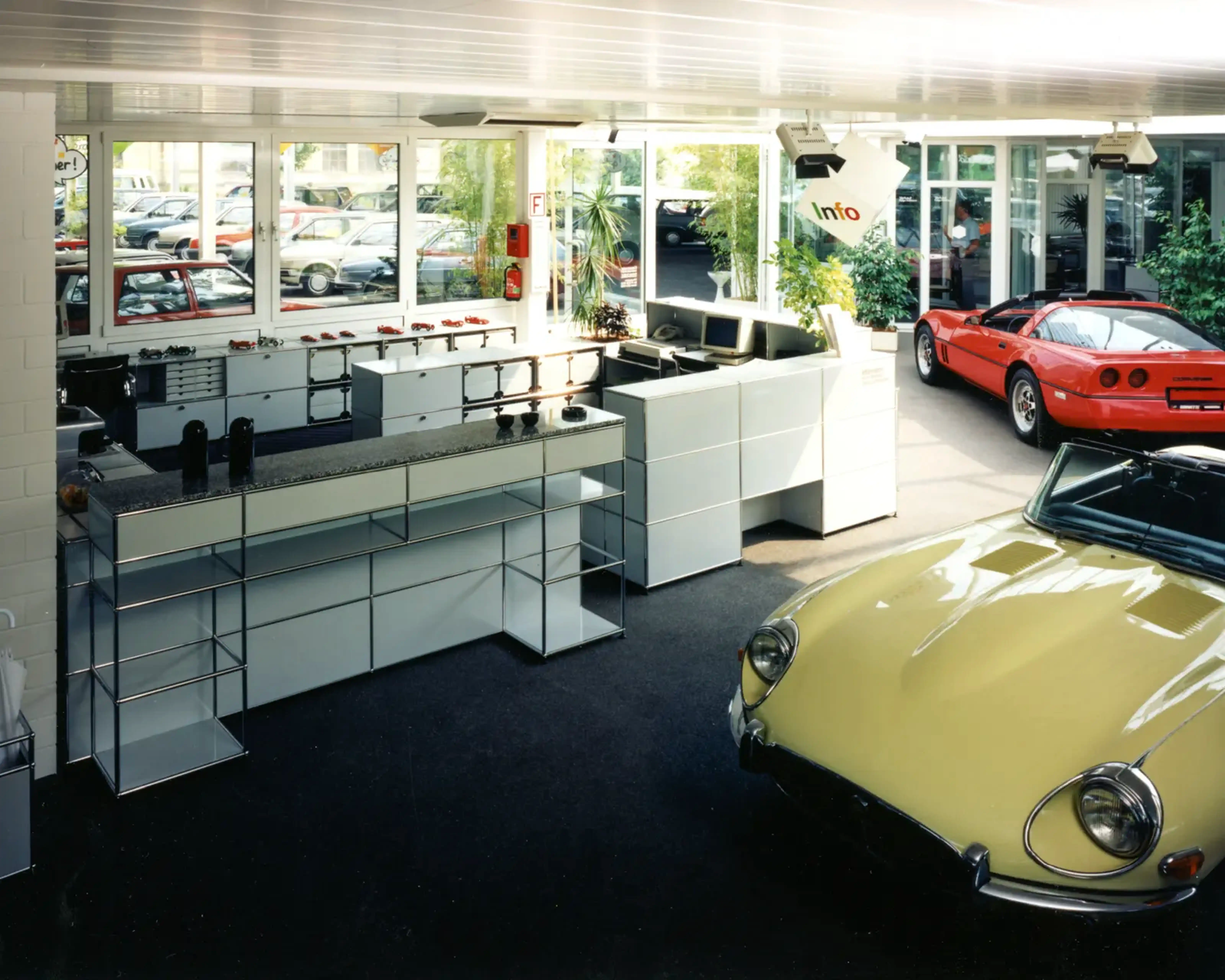
USM in car dealership

What I find interesting is that products designed purely for function often have a certain balance. They need to do many things, yet they should not add sentiment or emotion. The materials are cold. The forms are strict and geometric. The thinking behind it is industrial. And yet, despite all of this, USM today manages to evoke something emotional that makes people grow attached to the product.

It is not necessarily about nostalgia. The feeling comes from the way the system moves and grows with you. Exactly as it was intended, only now far beyond the office it was originally designed for. When USM decided in the late 1960s to sell the system commercially, it allowed others to become part of the philosophy behind the product.

The furniture moved with the lives of the people who owned it. It changed when their lives changed. Panels were replaced. Modules were added. Layouts were rearranged. Over time the cabinets became a kind of memory. Not of objects, but a storage of moments for the person living with it.
OJAS listening room with vinyl collection in USM Shelves + Drawers

Structure and self expression rarely exist in the same product. Most products are designed either to express personality or to serve a function. One or the other. What makes USM interesting is that, long before we realized it, it managed to combine these two seemingly opposite ideas.

A system built on restrictions and neutrality becomes a canvas. When simplicity is taken far enough, it creates freedom.

Office outfitted with USM Furniture

USM Haller, Built to Be Lived With

Tom van Leent

USM Storefront

A: USM Archive

L: USM Archive

R: USM Archive

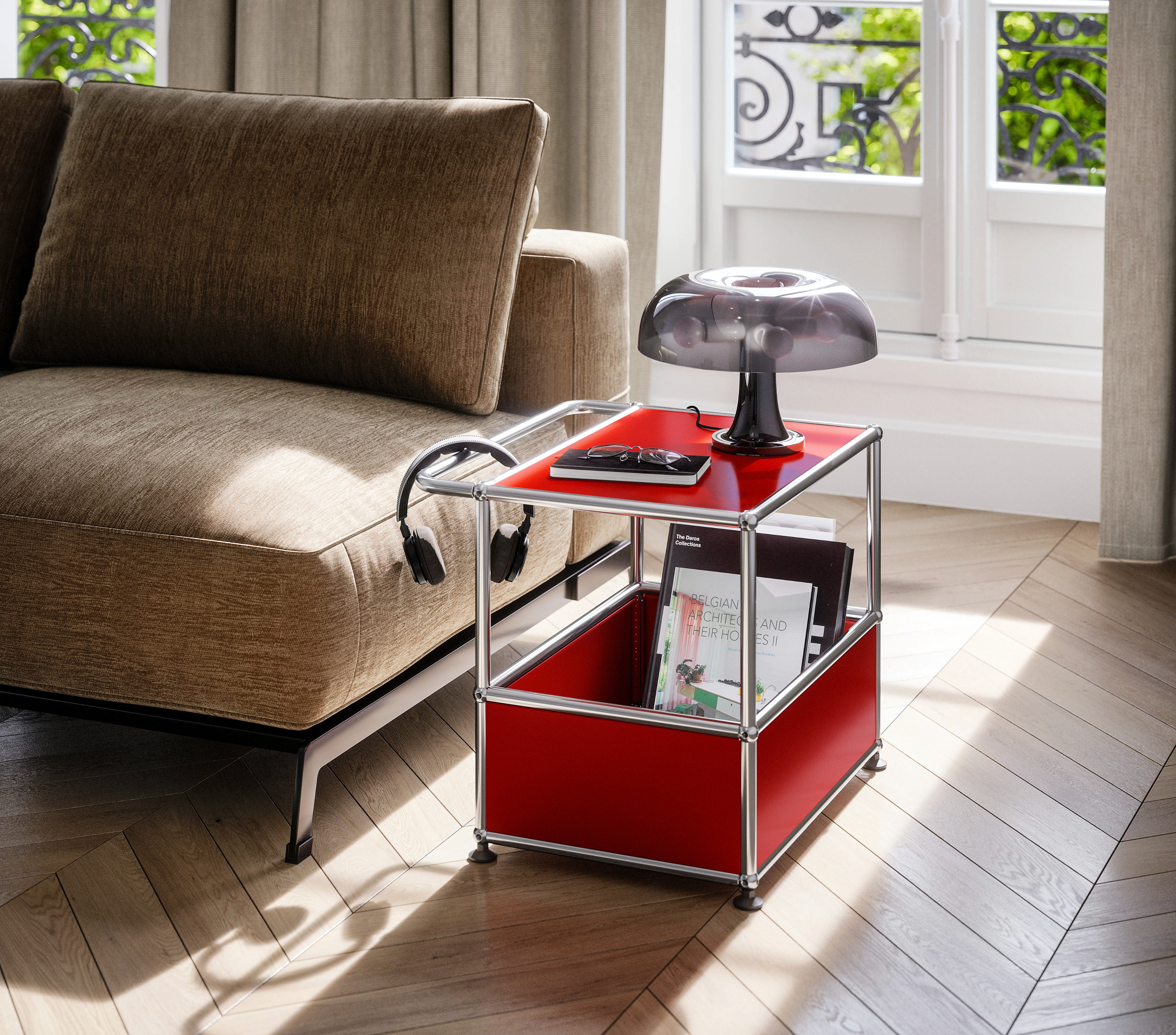
USM Side Table

To me, that is what good design does. It does not fill everything in for you. It leaves enough space to make something your own, and to keep making it your own.

What truly lasts is not what is made to impress. It is what is made to live with. USM Haller modular furniture system has been doing exactly that for more than sixty years. In offices and apartments. Across industries and generations. In spaces that have nothing in common.

Most products are designed to stand out. A USM cabinet is simply always there.

A: USM Archive

A: USM Archive

Read Next

Knoll: Total

Architecture

Archive

Instagram

Substack

TikTok

Spotify

Privacy Policy

© 2026 Food For Thought. All rights reserved.

Q2

Food For Tought Logo

2026

Tom van Leent

USM Haller, Built to Be Lived With

I can’t remember the first time I saw a USM Haller cabinet. But that is probably the whole point. It doesn’t need to stand out. It is simply there, doing what it is supposed to do. Yet once you start paying attention, you begin to see it everywhere. In places that have nothing to do with each other.

An apartment in Amsterdam. An office in London. A museum library in New York. A clothing store in Paris. The same cabinet, placed in completely different contexts. And yet it does not matter where you encounter it. It does its job and it works.

USM Office setup

USM Haller started in 1885 as a metalworking company. In the 1960s, architect Fritz Haller was asked to design the company’s new headquarters. Along with it came the request to design furniture that would match the modularity and flexibility of the building itself.

USM in car dealership

Structure and self expression rarely exist in the same product. Most products are designed either to express personality or to serve a function. One or the other. What makes USM interesting is that, long before we realized it, it managed to combine these two seemingly opposite ideas.

A system built on restrictions and neutrality becomes a canvas. When simplicity is taken far enough, it creates freedom.

OJAS listening room with vinyl collection in USM Shelves + Drawers

What I find interesting is that products designed purely for function often have a certain balance. They need to do many things, yet they should not add sentiment or emotion. The materials are cold. The forms are strict and geometric. The thinking behind it is industrial. And yet, despite all of this, USM today manages to evoke something emotional that makes people grow attached to the product.

It is not necessarily about nostalgia. The feeling comes from the way the system moves and grows with you. Exactly as it was intended, only now far beyond the office it was originally designed for. When USM decided in the late 1960s to sell the system commercially, it allowed others to become part of the philosophy behind the product.

The furniture moved with the lives of the people who owned it. It changed when their lives changed. Panels were replaced. Modules were added. Layouts were rearranged. Over time the cabinets became a kind of memory. Not of objects, but a storage of moments for the person living with it.

Suzuki exhibition set up using USM cabinets

What Haller created was a logical and versatile system. Components produced separately and in large quantities, assembled according to the needs of each space. Steel tubes, chrome spheres, and colored panels. No unnecessary decoration. Nothing added just to make it look beautiful. Pure function, with the ability to grow and change when needed.

USM Factory designed by Fritz Haller
USM Side Table

Above: USM Archive

USM Storefront
Office outfitted with USM Furniture

To me, that is what good design does. It does not fill everything in for you. It leaves enough space to make something your own, and to keep making it your own.

What truly lasts is not what is made to impress. It is what is made to live with. USM Haller modular furniture system has been doing exactly that for more than sixty years. In offices and apartments. Across industries and generations. In spaces that have nothing in common.

Most products are designed to stand out. A USM cabinet is simply always there.

L: USM Archive

R: USM Archive

USM Archive

USM Archive

L: USM Archive

R: USM Archive

Above: USM Archive

Read Next

Knoll: Total

Architecture

Archive

Instagram

Substack

TikTok

Spotify

Privacy Policy

© 2026 Food For Thought. All rights reserved.